

The Roman Forum
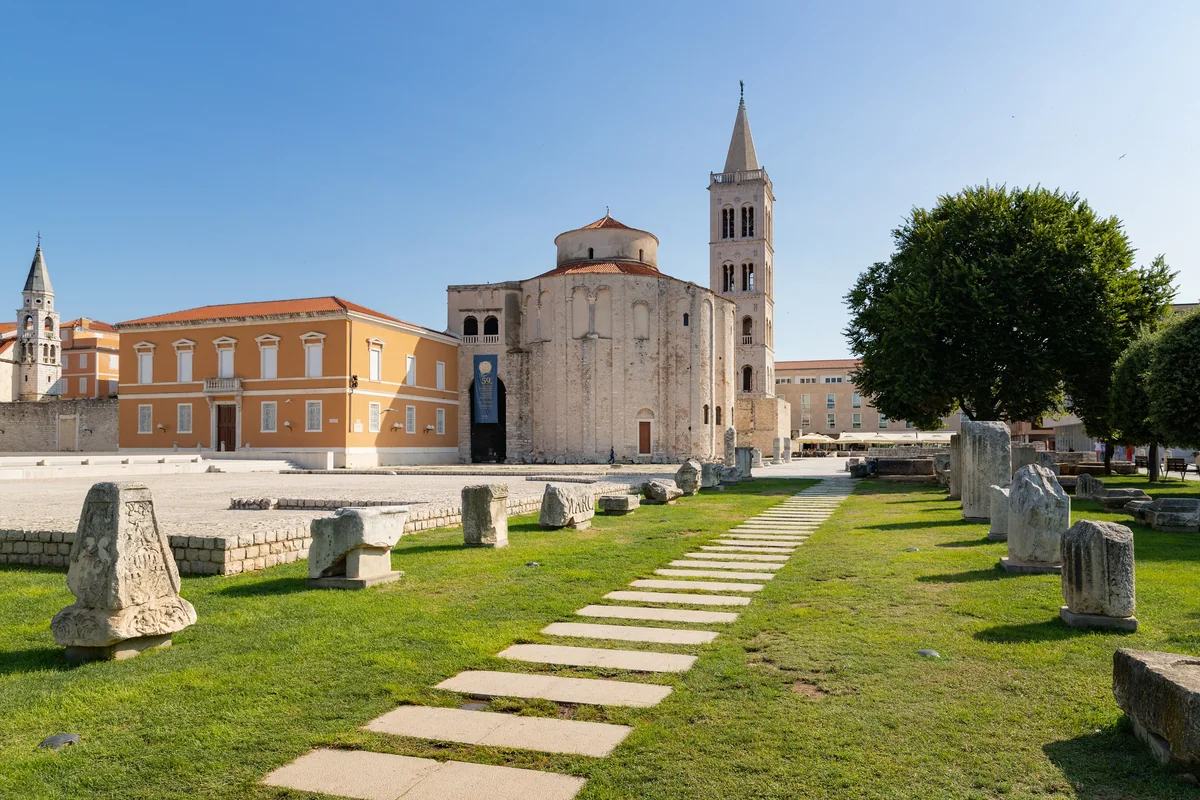
The Forum’s origins reach back to the first century BC. Today, Roman remains sit within the everyday life of the peninsula. Give the square a slow circuit before choosing a café: the relationship between the stones, neighbouring churches and open sky is the real spectacle.
Reference: Zadar Tourist Board · Forum
St Donatus & St Anastasia
The rounded form of St Donatus is one of Zadar’s most recognisable silhouettes. Nearby, St Anastasia is a Romanesque cathedral. View them together, then look closely at their contrasting shapes. If you plan to enter, check visitor hours and respect worship and any event closures.
Reference: Zadar Tourist Board · Churches · Zadar Tourist Board · St Anastasia
Foša, the gates & the walls
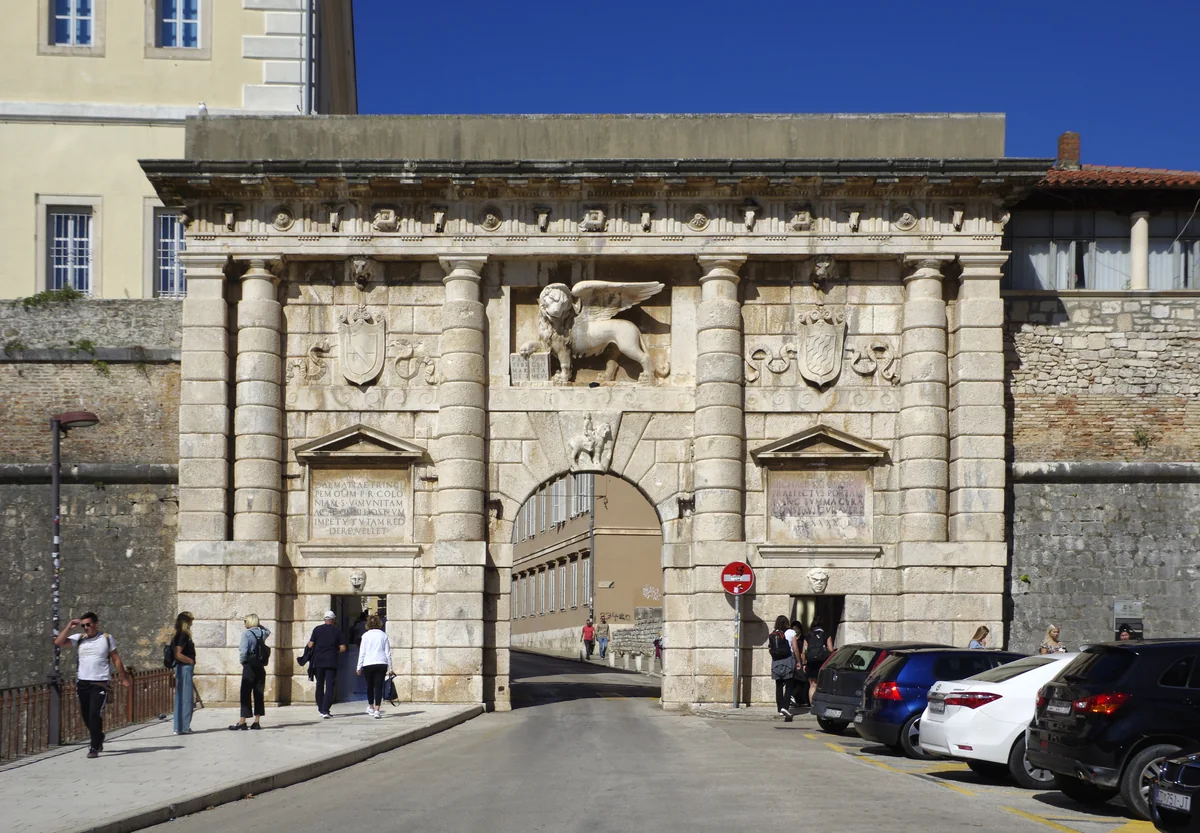
Foša is the small harbour beside the old defences. Approach from the water’s edge to appreciate the scale of the Land Gate, dated 1543. Follow the transition from the harbour into the lanes: the gateway changes the mood of the walk in just a few steps.
Reference: Zadar Tourist Board · Foša · Zadar Tourist Board · City walls
Understanding the UNESCO listing
Zadar’s defensive system forms part of the Venetian Works of Defence, inscribed in 2017. The designation is specific to the fortifications. Read the official UNESCO entry for the full context before treating the entire old town as one listed monument.
Reference: UNESCO · Venetian Works of Defence
The city still creates
At the Sea Organ, waves make sound through pipes beneath the waterfront. Nearby, the Greeting to the Sun uses solar energy for its night-time lights. End here to see another layer of Zadar: a contemporary public space that asks you to listen, look and stay awhile.
Reference: Zadar Tourist Board · Sea Organ · Zadar Tourist Board · Greeting to the Sun
Outdoor squares and the waterfront can be explored independently. Confirm separate entry arrangements for interiors and towers.
Reviewed 19 September 2026